Games Workshop
Tyranids: Lictor
Tyranids: Lictor
Couldn't load pickup availability
In the Warhammer 40,000 universe, the Lictor (Tyranicus chameleo) is a highly specialized Tyranid bioform designed for stealth, infiltration, and assassination. Often acting as the vanguard of a Hive Fleet, Lictors are solitary hunters that operate independently of the Hive Mind's immediate synaptic control to stalk prey behind enemy lines.
Key Biological Features
Chameleonic Skin: Their chitinous exoskeleton is covered in chromatic micro-scales, allowing them to blend perfectly into any environment and remain nearly invisible even to advanced sensors.
Feeder Tendrils: These specialized facial tentacles allow the Lictor to probe the brains of its victims. By consuming a target's brain, the Lictor can absorb their memories and tactical knowledge, revealing enemy secrets to the Hive Mind.
Mantis-like Talons: They possess large, razor-sharp scything talons used for climbing vertical surfaces and impaling prey with lethal precision.
Sensory Enhancements: Lictors are equipped with body heat dampeners, vibration-absorbing hoof hairs for silent movement, and specialized brain casings to mask their electromagnetic signals.
Role and Behavior
Vanguard Scouts: Lictors are often the first Tyranids encountered on a planet. They gather intelligence on local defenses and mark high-value targets with a potent pheromone trail that guides the rest of the swarm to the slaughter.
Assassination: They excel at eliminating enemy commanders and specialists, disrupting the chain of command before the main invasion begins.
Psychological Warfare: Their ability to strike from shadows and vanish without a trace has earned them a mythical, terrifying reputation among Imperial forces.
Singular Will: Lore suggests that Lictors are not individuals but rather a single consciousness reborn in many bodies, sharing memories and experiences across the entire species.
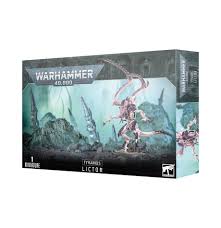
The latest multipart plastic kit (released for 10th Edition in 2023) allows for various poses, including lunging or lurking, and provides head options with retracted or flared feeder tendrils.
Share